Colin and Renata Hume: Our House
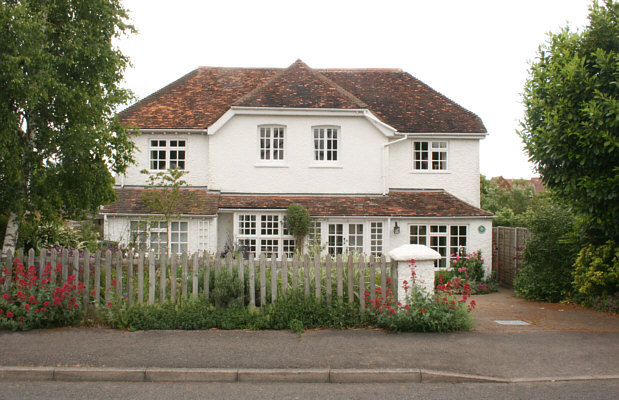
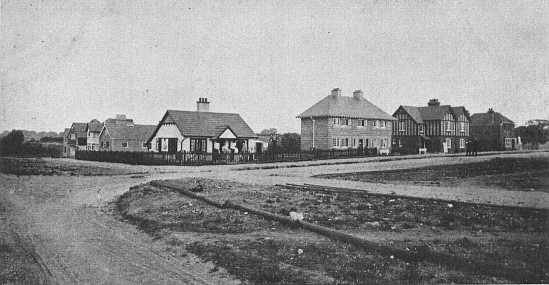
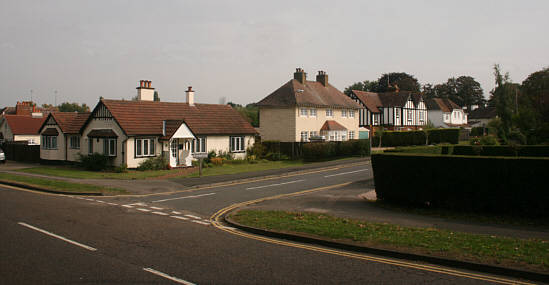
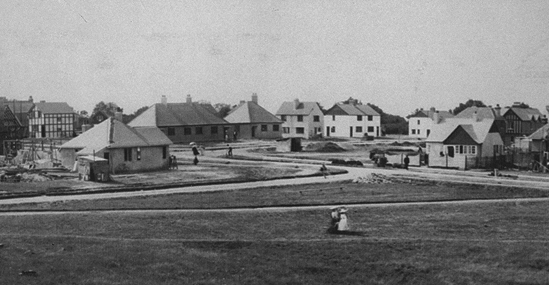
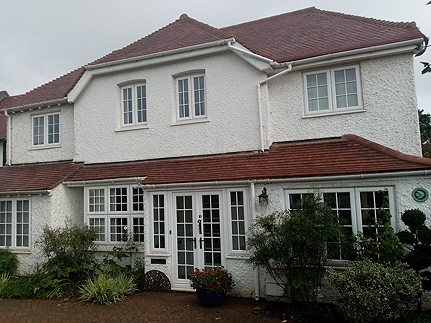
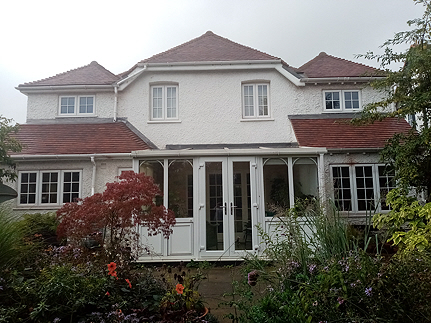
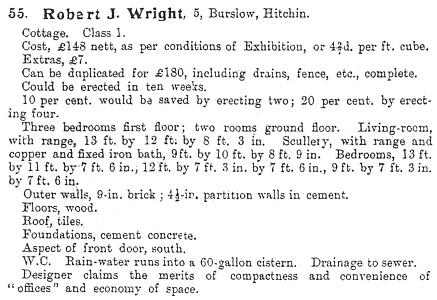 This is the entry from the original prospectus. The house was built by a firm in Hitchin, the nearest large town to Letchworth. It had two rooms downstairs (front and back, the front room the full width of the house and the back room narrower to allow for a W.C.) and three bedrooms upstairs (the front room the full width of the house and the two back rooms side-by-side). The two back bedrooms and the scullery were served by a central chimney; the living room and the main bedroom were served by a chimney on the left-hand side as you face the house. The chimneys are long gone, but the two back bedrooms still have the original fireplaces.
Once you know that the house has since been extended on both sides, you can see that the central part was the original building — not nearly so large!
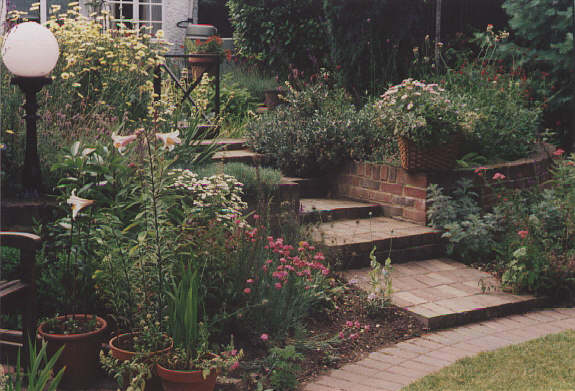
 After finishing the interior we turned to the garden (which is probably why Renata chose the house in the first place). Having been given the run-around by builders for over a year we got a book on bricklaying out of the library, ordered various tools and supplies, and started building steps and retaining walls in the back garden. Progress was hampered by snow and rain but it was eventually finished, including an access slope at the side of the pond — so that I shall still be able to get into the garden even when I'm in my wheelchair. Unfortunately I damaged my back at the end of August 2001 while mixing and laying concrete for this, and my leg was very painful for the next couple of years — when I flew to Holland in December I actually needed a wheelchair!
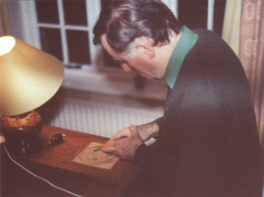
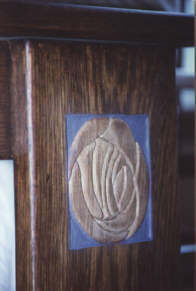
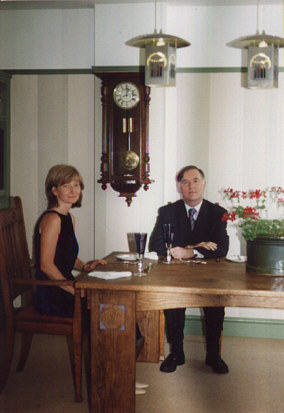
In the photo labelled “Our wall and steps” you can also see a lamp which we rescued from the Spirella Building — one of the landmarks of Letchworth which was being renovated in 1998 for £11 million. We acquired a new drive and revamped front garden — no, we didn't do the drive ourselves, though it was such hard work supervising the men and arguing with the boss that it still exhausted us. However, having seen the way the experts removed two large trees, I bought myself a chain-saw and demolished a tree which was in danger of falling over and landing on the Guide Hall just behind our back garden. The next skill I acquired was wood-carving, to add some Mackintosh roses to an oak dining table we've had made — a copy of (half of) the dining room table from his “House for an Art Lover”. I bought some tools, borrowed another book from the library, and you can see the results below. We moved large quantities of earth from a garden in Hitchin to our greatly extended plot in the front garden, and Renata was forced to visit even more garden centres to fill it with plants. We also made the picket fence at the front and on the right-hand side, and some trellis on the left-hand side.
We bought a new shed to replace the two we removed, and had a new fence built down one side of the back garden. Renata redesigned the lawn to be a row of three circles (see the photo just below), and a gardener/builder levelled all the circles, added brick surrounds and steps between them, and covered the lawns with new turf. After that we erected a hexagonal greenhouse at the bottom of the garden, so I saw even less of Renata than before!
I had thought the hard landscaping was finished, but we still had a lot of bricks left over, so Renata then made a raised vegetable bed outside the summer-house at the bottom of the garden — and I even had to help her with a car-load of horse manure to prepare the soil. What a come-down for an international caller and his new BMW! After that, Renata was the one with the bad back.
By 2004 the wall in the front garden (built with the cheapest bricks available by the people who did the drive) was deteriorating — the bricks in the top row were starting to split — so we covered the wall in pebbledash and painted it white — it looked much better (for a time). Renata was concerned to do this before the plants started growing, and she was also very worried because she'd agreed to open the garden to the public (along with a number of others in Letchworth) to raise money for charity and was concerned that everything should be perfect. I'm pleased to report that on Sunday 27th June 2004 she had 432 visitors, received many enthusiastic comments, and was totally exhausted for the next few days! The next Open Garden day was on Sunday 25th June 2006, and this time I was around to check people's tickets as they arrived (since that was the job which did not demand any knowledge of gardening). The next one was on June 29th 2008 and Renata was complaining that now she was earning a living as a gardener she didn't have time to get her own garden ready, though several people asked her how many helpers she had and were amazed to discover that on the contrary she helps other people.
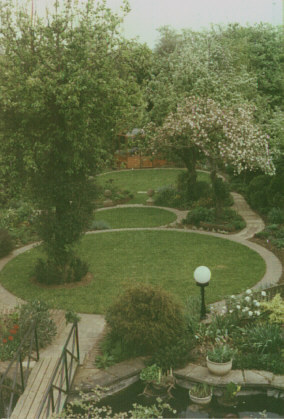
seen from the upper floor of the house.
I really had thought the hard landscaping was finished, and I hadn't done anything in the garden for several years though of course Renata is always busy there. But in the Summer of 2007 she decided she didn't like the irregularly shaped small pond, which was leaking anyway, and wanted to replace it with two small circular ponds, edged with bricks to match the three lawns. We dismantled the old pond (my trusty jigsaw proving invaluable once again), Renata did the really hard work of digging the new holes, and I did the more mathematical job of laying the bricks so that the result was level, regular and circular. Renata said they looked like two vents from an underground chamber, but once she had levelled the earth and put in some plants they were fine.
You would hardly credit it (unless you know Renata), but less than six months after we had built the new ponds she changed her mind and decided she would prefer one somewhat larger pond, using a plastic container I foolishly pointed out to her at a garden centre. We also bought a replacement stream to feed into the main pond, made of fibre glass rather than the existing chunks of concrete, and Renata redid one of the paths to be brick rather than the slabs and tiles which I rather liked. She had a bad back at the end of 2008, going on for most of 2009, so this work was on hold, but in April 2009 I hired a pneumatic drill (or “breaker”, as we say in the trade) and broke up the old concrete stream, and we installed the new one, which involves a length of guttering, a dog's anti-scratch collar and a plastic flower pot with holes in it. We struggled with the flow of water for some time, but no matter what we tried it splashed somewhere. Basically there's too much water for the stream, so eventually using a bit of lateral thinking I made a hole in the pipe near the pump, so some of the water is pulled into the pump and immediately sprayed back into the pond. This solved the problem, and it looked as if there were some strange creature sending out ripples across the pond, which all added to the excitement. I even planted a couple of trees! We needed to get things done so that the garden had time to recover before the Open Days…
In 2009 the garden appeared in the “Yellow Book” published by The National Gardens Scheme and was open on Friday 5th June and Sunday 7th June. The weather suddenly took a turn for the worse, having been hot and sunny for the previous few weeks, but the visitors were very appreciative.
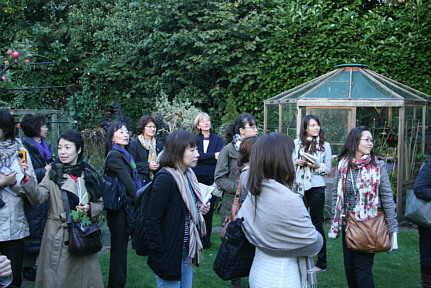
That September we had twenty-three Japanese visitors plus an interpreter looking round our house and garden, and they were delightful! All female, design students from seven schools in Japan plus their professor. They didn't have nearly enough time allocated for the visit, but they loved and photographed everything, including the worms in the compost bins and Chlöe the cat.
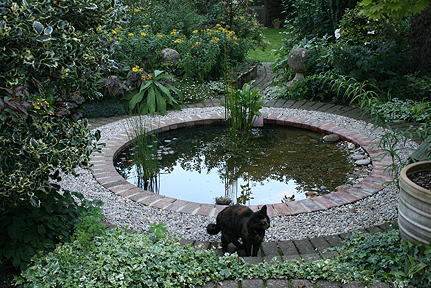
In January 2010 I demolished the two small ponds and by March the new larger one was in place — Renata has since smoothed out the earth between the edging tiles. She has decided to keep the container of the further pond in place, fill it with earth, and grow some plants which thrive in a damp environment.
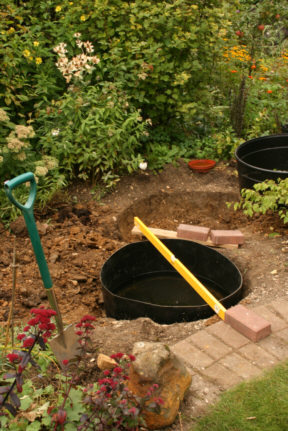
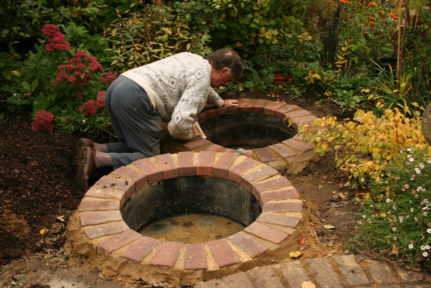
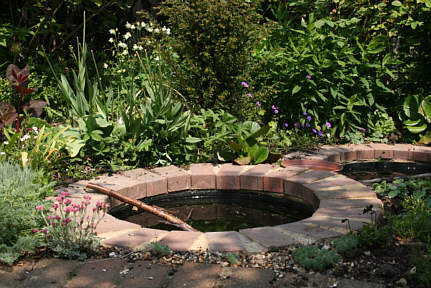
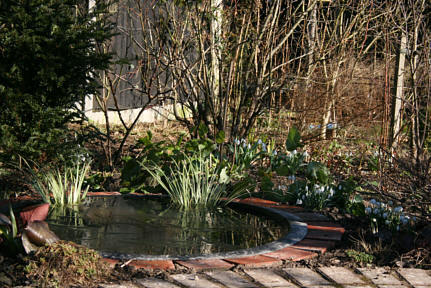
And by December 2015 the pond had gone! Renata didn't like the tile edging, and without the edging she grew plants up to the edge of the pond, and apparently these were havens for slugs. I made other suggestions but she didn't like them; she said that part of the garden was too “busy” and with her bad back she wants to simplify things anyway. So, no more small pond(s).
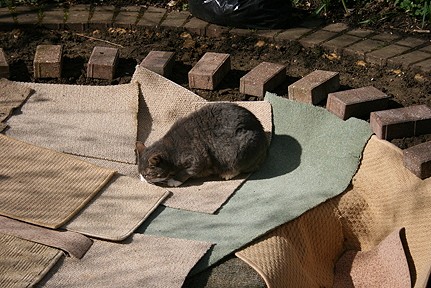
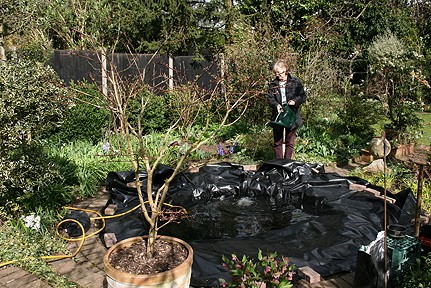
2017 — the saga continues! Renata was feeling guilty about depriving the frogs and newts of their habitat, so she was thinking of making a wildlife pond in the middle of the bottom lawn — the largest of our three circles. I didn't think this was a good idea, and I suggested replacing the middle lawn with a pond. She decided to go for this. We weren't opening the garden that year, so it was a good time for any major changes. Here you see the progress.
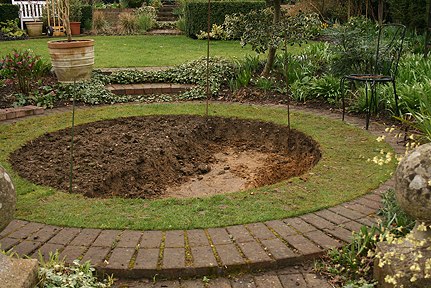
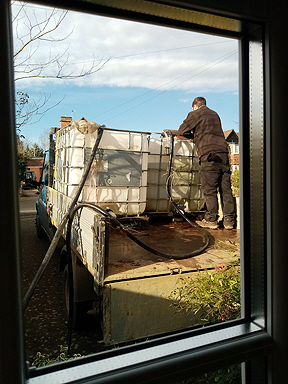
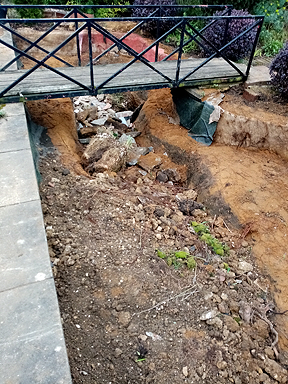
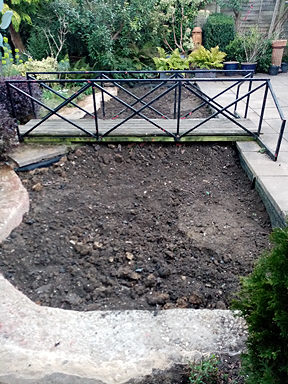
2021 — the saga still continues! Renata had never been keen on the large pond just behind the house, but it seemed an enormous job to get rid of it. After 20 years of feeding the fish, creating a new stream, buying and maintaining many pumps and filtration systems, she decided to get rid of it. On 23rd February the pond was emptied and the fish taken to somewhere in Knebworth where a new pond is being built for them. Three of our neighbours were having building work done, so I transported many barrow-loads of earth and rubble (with assistance from a few neighbours) to fill in the large hole. Renata removed some of the plastic liner — some of it will stay. All the odd-shaped paving stones round the edge have gone in, together with anything else she decided she didn't want. On 5th March, Mike Hann (who also opens for NGS and runs our local Letchworth Open Garden scheme) came to cut up the bridge and take it away — he and his wife are well organised and the whole job was done very quickly. He plans to use it to make garden sculptures. Three days late 4 tonnes of top-soil were dumped on our drive, and the wheelbarrowing started again: with some help from a neighbour we carried this to the back and into the hole. Less than two weeks start to finish, except that the soil settled and we had to add more at intervals. We needed a path where the bridge was, so on 15th March a load of aggregate, sand, cement and pavious arrived and Renata has created our final (probably) path and transformed the area into yet more garden.
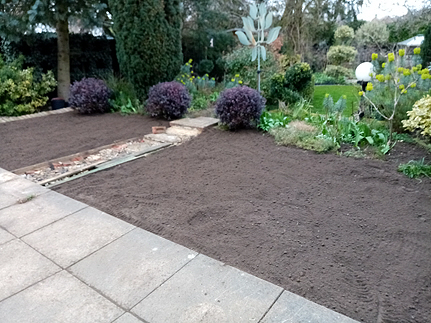
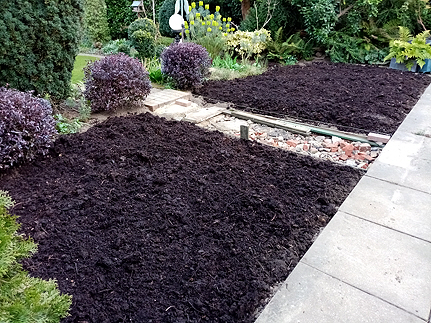
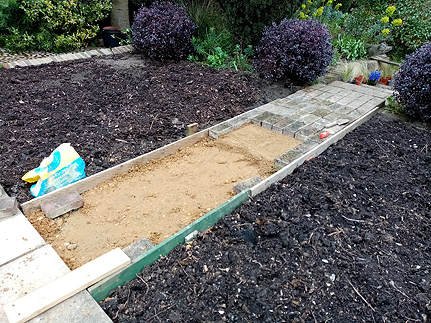
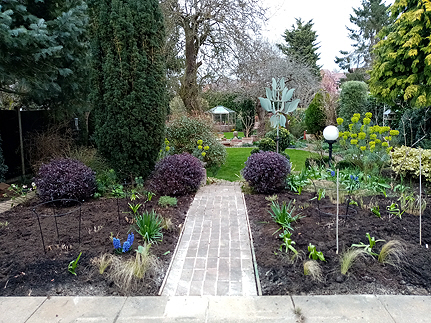
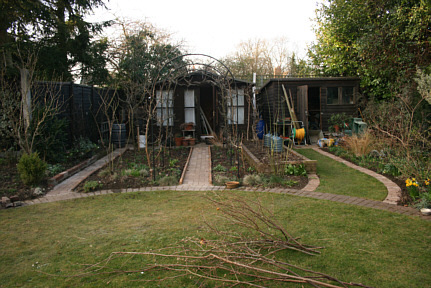
In 2012 Renata decided she needed yet more hard landscaping — the need brought on by finding a large number of unwanted paviours (concrete bricks) in one of her clients' gardens. The paths to the side and door of the summer house have been redone (the latter for the third time) and the grass path to the shed has been edged with paviours. The last thing was (I admit) my suggestion: the grass path between the second and third circles has been replaced by paviours.
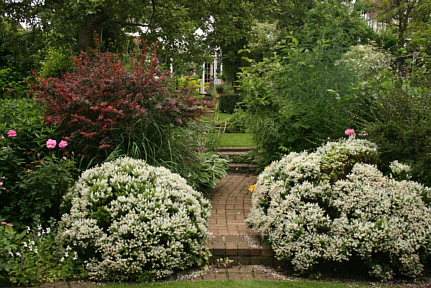
In 2013 the wall in the front garden had been giving trouble for a few years — the pebbledash render kept coming off — so we had it topped with some old roofing tiles given to us by a neighbour, and Renata has extended the hedge in front of it so that you can't see the side of the wall!
In 2021 Renata decided that the narrow part of the front flower bed nearest the house was really not very practical, especially with her bad back, so a builder removed it and instead created a paved area for our wheelie bins.
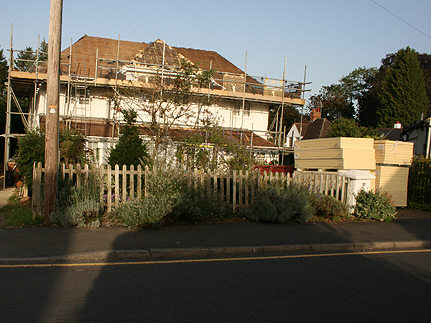
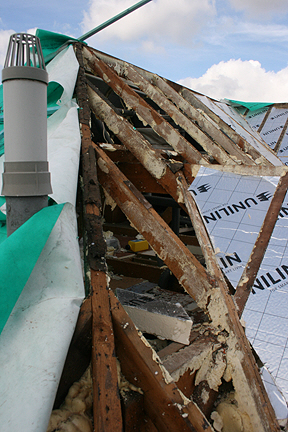
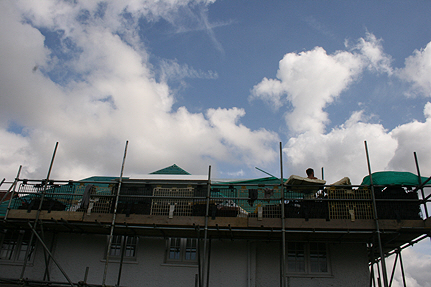
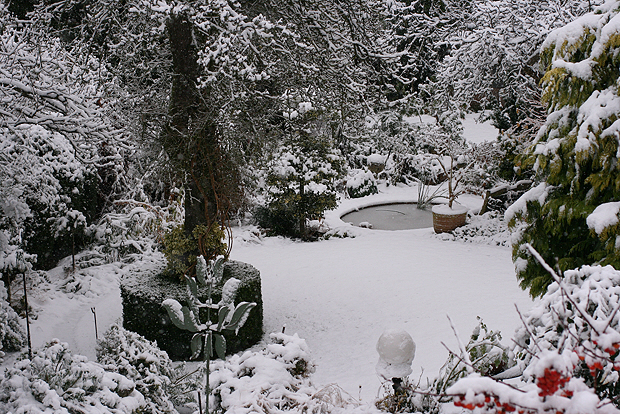
Of course it isn't always spring or summer in the garden. Here you see it in the snow in December 2017.
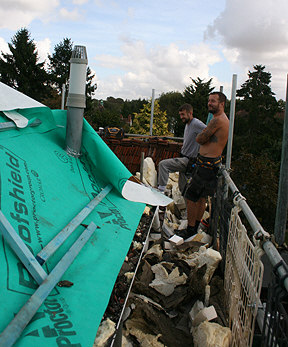
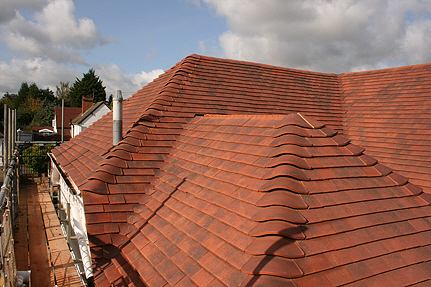
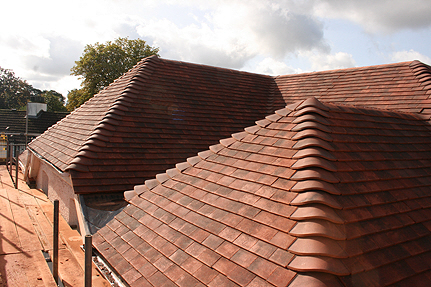
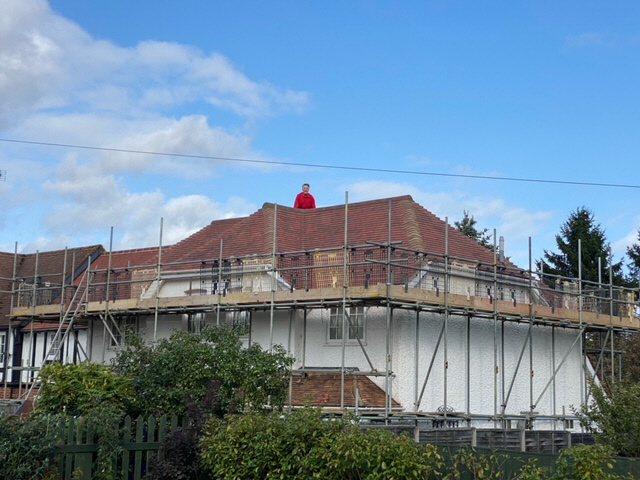
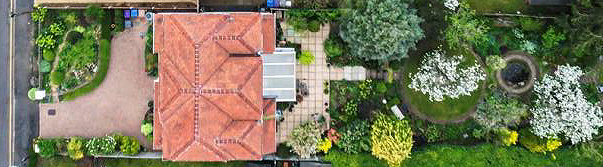
And here's a photo taken from a drone in April 2026. From left to right you can see a little bit of Cross Street, the pavement, our drive (which isn't just a light brown smudge but some nice brindle paviours), the house with its complicated (and new) roof, the conservatory jutting out from the back, the patio and its continuation as a path (which used to be a bridge), the steps down, the top circle dominated (from above) by a large apple tree, the wildlife pond and some more garden — it doesn't go as far as the greenhouse, but we weren't paying for it!
You can see more photos of the garden at cyclamengardens.com
Click here for a street map. Click here for directions in words.
Related web sites
| cyclamengardens.com (Renata's website) |
| Charles Rennie Mackintosh Society |
| The Willow Tea Rooms |
| The Spirella Building |
| Our area from above |