
 The Fallibroome Collection
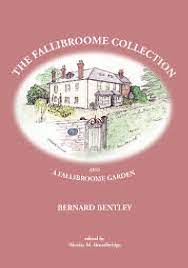
Bernard Bentley, who died in 2003, was a Mancunian and a founder member of the Manchester Morris Men. He was an authority on North-west Morris, as well as a noted interpreter of English country dances.
The 18th century was the heyday of the triple minor dance. Bernard Bentley wisely converted many of them to duple minor or three-couple sets. His explanations mainly use the same terms as Cecil Sharp (except the unexplained “Foot it”), but he isn't so good at indicating the timing of the movements; his descriptions can be a bit vague. On the other hand he's very honest about the changes he's made to the dances, either to convert them to three couple sets or because the original instructions didn't seem to make sense or fit the music. In some cases I've dropped his changes and gone back to something closer to the original; in one or two cases I've made changes myself (and I will tell you so when I'm calling the dances).
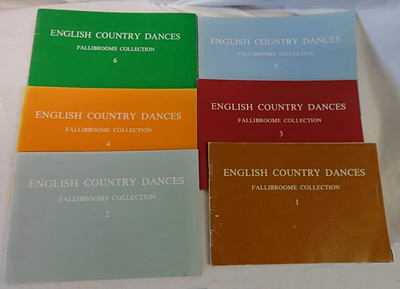
There are 102 Fallibroome dances, and many of these don't appeal to me (at least on paper) because I don't feel there's enough to them. They may be partly redeemed by good tunes — see what you think. Bernard Bentley certainly had an ear for a good tune — often an unusual tune — and some musicians say that there's very definitely a “Fallibroome” style, different from a “Playford” style. I've now set all the tunes — see the table below — and I'm not convinced of this. I think what they may be hearing is the difference between the early tunes of John and Henry Playford, and the later tunes of John Young and many other publishers. And having said that many of the dances are too simple for me, I still struggle to call “Duchess of Grafton” with its 10-bar A-music and 11-bar B-music!
Two top favourites with English dancers in North America are Saint Margaret's Hill and Dublin Bay, though the dancers don't know that the versions they love are from Fallibroome.
And for the people who won't be satisfied with anything less than a complete list in alphabetical order, here are the titles and the volume in which they appear. In some cases the titles are links to my own notes or interpretations, and in all cases a circle button is a link to my version of the music which you can print out or listen to.
3 • The Accomplished Maid  5 • The Anna Maria 2 • As Quick As You Please 5 • Assembly of Lovers 6 • The Balloon 1 • Barn Elms 2 • The Beau's Retreat 4 • The Beaus of the Park 4 • The Beaux Delight 1 • Blackwell Hall 6 • Bouzer Castle 4 • Burghee's Hole 5 • Burgundy's Flight 4 • Buskin 6 • Camberwell 3 • Capt. Catton's Maggot 3 • Chelmsford Assembly 5 • Clapham Frolick 6 • Cock Ey'd Brown 4 • Cream Pot 5 • The Cuckoo's Nest 1 • Daphne's Delight 4 • Doll Tearsheet's Rant 1 • Doway 2 • Draper's Gardens 1 • Dublin Bay 6 • Duchess of Grafton 4 • Easter Eve 5 • Easter Thursday 6 • The Eliza 3 • Enfield Wash 3 • The Green Man 1 • Hambleton's Round O 5 • The Happy Pair 6 • Hare Hatch 1 • High Ginks 4 • Huntington's Maggot 2 • I often for my Jenny strove 1 • In the Fields in Frost and Snow 2 • John the Madman 5 • Johnny, cock thy Beaver 4 • The Jolly Cooper 6 • Joy After Sorrow 6 • Kings Arms Assembly 5 • The Ladies' Joy 3 • Lord Anson for ever 6 • Love and Beauty 2 • Love and a Bottle 1 • Love's Triumph 4 • Mars and Venus 2 • The Merry Companion 3 • Merry Girls of Maidstone 5 • The Miser's Jewel 4 • Miss Barrett's Waltz 3 • Miss Nancy's Delight 1 • Miss Sayers' Allemande 6 • Miss Silvie's Delight 3 • Miss Sparks's Maggot 1 • Monk's March w/ the Wanders 2 • Mount Hills 1 • Mrs. Hill's Dance 1 • Mrs. Savage's Whim 3 • New Year's Day in the Morning 5 • Paston's Maggot 1 • Paul's Alley 6 • Philandering 1 • The Physical Snob 2 • The Pilgrim 4 • Pinks and Lillies 3 • The Primrose 6 • Prince Frederick's Hornpipe 2 • Put In All 4 • Rakes of Rochester 5 • Ratcliff Cross 6 • Ravenscroft's Hornpipe 6 • Saint Andrews Assembly 1 • St. Brides 4 • St. Giles's Pound 3 • St. James's Beauties 1 • St. Margaret's Hill 6 • The Sea Nymphs 4 • Shropshire Lass 4 • The Spanish Gypsie 3 • The Splendid Shilling 5 • Sprigs of Laurel 2 • Three Coney Walk 5 • Tom Jones 4 • Top and Bottom 3 • The Topaz 2 • A Trip o'er Tweed 3 • Trip to Virginia 2 • Tunbridge Walks
2 • Union Jigg 2 • Vienna 5 • The Virgin's Frolick 2 • Westmorland 5 • Wildboar's Maggot 6 • Wolverton Hall 5 • Woodlark 5 • Worcester Assembly 3 • The Young Fox 2 • Zephyrs and Flora

On Wednesday, January 31, 2007, Don Curtis from Brighton wrote:
Thanks for your Fallibroome page. I enjoyed it. Very lively, opinionated and forthright as I would expect from you Colin.
Your page was linked to me by Peta Webb and Elaine Bradtke when I was enquiring about the origin of Huntington's Maggot.
Elaine has excellent hunches she says
'I can't find any solid information on where it came from, but I have some hunches. It is very Baroque in style, possibly French'
She also says
'The word Maggot, from the French _Magot_, means a whim, or a fancy. I suspect it was written in the french style by an English composer. Pepys mentions the Huntington Waits in 1667, so the title could refer to this band of musicians. Or, as it sounds to me, it could be originally from some sort of theatrical work a masque or revel. There are a body of plays from Elizabethan theatre based on the story of Robert, the Earl of Huntington, also known as Robin Hood. It is also known that Playford took many of his tunes and dances from courtly sources such as masques and revels. I haven't been able to find the missing link - which exact play/revel/masque was the source. So this is merely supposition on my part.'
But no one is quite certain. If you can add anything to the above very helpful information I would be delighted and surprised.
Best wishes
Don